Research assistant
Plan and execute research tasks. Deliver results, executable methods, and traceable records that scientists can review and refine.
PRODUCT ENTRY POINTFROM ASSISTANCE TO DISCOVERY
Life-science AI that develops better methods, learns from experimental feedback, and carries validated experience into the next discovery.
A research platform built around recursive self-improvement.
Architecture overview. The integrated RSI loop is under development.
Drug-property benchmark tasks
Applications with wet-lab validation
Company-owned experimental trajectories
Company-reported research evidence · September 2026
01 / THE PLATFORM
Research assistance brings in real tasks. High-quality computational and experimental trajectories inform model post-training. Validation connects those capabilities to discovery.
Plan and execute research tasks. Deliver results, executable methods, and traceable records that scientists can review and refine.
PRODUCT ENTRY POINTUse task trajectories and experimental feedback to advance reasoning, planning, and generalization through post-training and independent evaluation.
CAPABILITY DEVELOPMENTConnect candidate design with partner-lab measurements. Retain validated experience and selectively advance research pipelines in areas of strength.
REAL-WORLD VALIDATION02 / RECURSIVE SELF-IMPROVEMENT
EvoFoundry’s research engine connects three layers of improvement: the experience it retains, the methods it develops, and the decisions it makes during execution.
Method memory, improvement memory, and execution memory preserve effective approaches, failed attempts, and repair paths.
Combine scientific models with task-specific algorithms. Search for improvements, then train and validate them on each new task.
Update objectives with new evidence, route tasks to proven starting points, and coordinate tools, compute, evaluation, and recovery.
Research evidence supports individual modules. Integration of the complete RSI loop and periodic model post-training remain ongoing development work.
03 / EARLY VALIDATION
Two experimental applications provide an early foundation for a broader life-science platform. Computational benchmarks separately test method development and reuse.
Company-reported early antibacterial screening. Hits used MIC ≤32 μg/mL. These are laboratory results; the reported MIC is specific to the tested candidate and assay.
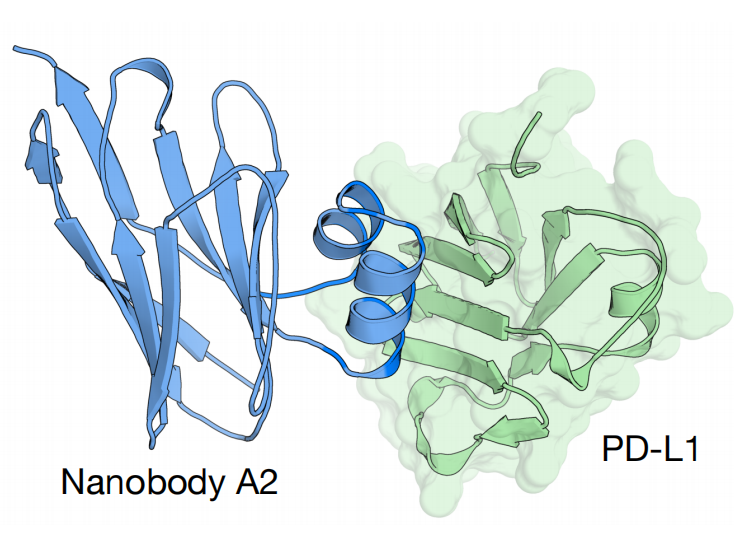
Company-reported BLI measurements of 24 candidates identified three PD-L1 binders. The image is a structural prediction; binding evidence comes from the experimental assay.
Aggregate normalized performance across 22 tasks, compared with nine agent approaches.
On six held-out computational tasks versus Claude Code. This comparison concerns API costs.
Of tested experience subsets outperformed the no-memory baseline when the pool contained 13 tasks.
All figures are company-reported research results from September 2026. Computational benchmarks and wet-lab measurements are presented separately; results depend on the stated task and assay conditions.
04 / COMPOUNDING RESEARCH ASSETS
Experimental facts, executable methods, and improvement records create reusable starting points. New tasks test whether that experience still adds value.
Trajectory use and model iteration are scoped to authorized data.
05 / TEAM CAPABILITIES
EvoFoundry brings together model-training expertise, scientific agent development, and experimental collaboration to connect computational research with physical validation.
Foundation-model training, post-training, and evaluation across scientific tasks.
Task planning, method search, tool use, and traceable execution.
Candidate design, partner-lab validation, and structured experimental feedback.
06 / THE NEXT STAGE
Capital supports model post-training, core hiring, and computational–experimental validation as EvoFoundry advances its platform and selected research pipelines.
Company plan · September 2026
Research assistant and RSI engine, proprietary experimental trajectories and molecular assets, and two early wet-lab applications.
Collect task trajectories, link experimental outcomes and failures, build independent evaluation sets, and complete a first post-training cycle.
Deepen academic and industry collaboration, run multiple validation rounds, and establish repeatable experimental feedback processes.
Advance selected candidates, repeat and optimize experiments, develop patent opportunities, and evaluate cross-task model improvement.
Forward-looking development milestones are plans, rather than completed outcomes.
INVESTOR INQUIRIES